
Stop Selling Protocols. Start Selling Outcomes
The Rise Of “Protocols”
The wellness industry has gone through a phase of offering passive modalities marketed as “recovery.” Over the longer term, a consistent pattern has emerged: clinics struggling to sustain demand for these treatments have responded by investing in more modalities – more equipment, more options, more variety on the treatment menu.
We’ve since seen clinics try to move beyond simply exchanging money for access to therapeutic equipment, toward services built around “protocols.”
But the truth is that when a protocol is offered, it’s often just a generic technique used to sort clients into a handful of predefined pathways based on broad categories.
Essentially, this is guesswork packaged up as a service – clients end up paying more for a wider range of therapies they don’t necessarily need.
What Real Expertise Looks Like
At the centre of wellness, physiotherapists, doctors, strength & conditioning coaches, personal trainers and nutritionists don’t work this way. Following a fixed protocol is a sign of limited clinical reasoning – an inability, or unwillingness, to adapt to the individual in front of you. When it comes to managing wellness, injury and recovery, there are simply too many variables from person to person for generic protocols to be genuinely effective. At best, it offers a loose guideline. At worst, it’s close to useless.
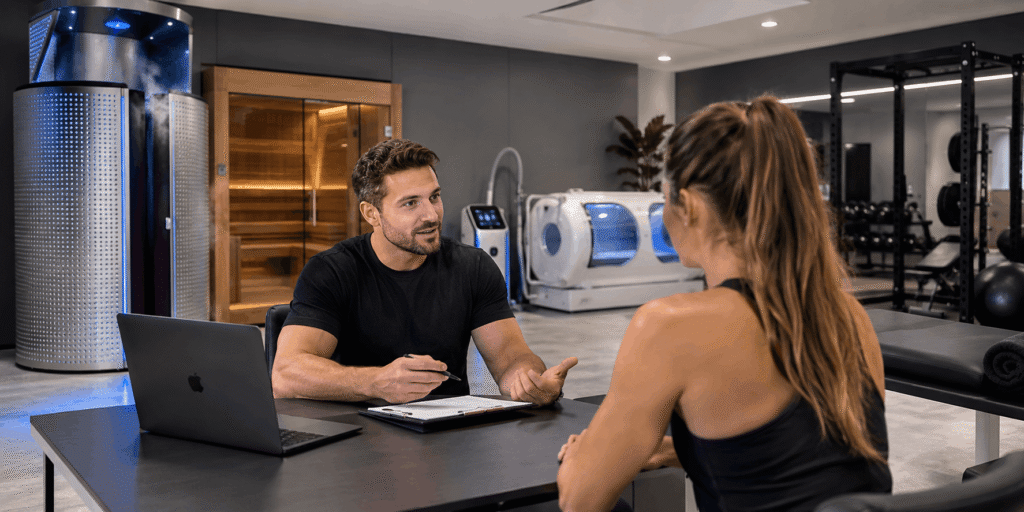
A quality service starts by gathering information about the client – not just their goals and symptoms, but more importantly, the underlying causes and obstacles standing in their way.
Don’t sell sessions or protocols. Sell outcomes, and the structured pathway to reach them.
When a client with an injury sees a physiotherapist or strength & conditioning coach, they aren’t sold the specifics of every individual session. They’re sold an outcome, with a forecasted timeframe, and every session is programmed to progress that specific individual toward it. The client books their next session because they trust the journey and the expertise of the coach or practitioner – not because they’re following a fixed menu of treatments.
It’s worth distinguishing this from the generic “protocol” described earlier. Every business will have a different approach: structured courses provide a clear, simple option, while a consultative approach can support a more personalised, premium service. The difference is that a structured course is still built around the individual client’s goals and presentation – it’s a package, not a category. A generic protocol sorts clients into a predefined group; a structured course sets out a clear pathway tailored to the person in front of you.
Where The Industry Falls Short
Working in wellness – whether delivering therapies or nutritional advice – should be no different.
Instead, many practitioners are operating in an unregulated industry without a real understanding of what recovery actually involves, injury management, or inflammatory processes. Too often, they’re selling the ideas they were pitched by salesmen when they bought the equipment.
Using thermal therapies in isolation – ice baths, Whole Body Cryotherapy, sauna use is not recovery. Yet it’s exactly what every wellness clinic seems to focus on in its marketing.
These are hormetic interventions with genuinely powerful benefits, and they can be highly effective as part of a personalised, wider approach. But used in isolation, their value for recovery is limited.
This holds the industry back. These therapies aren’t being marketed to their real strengths, or implemented in a way that achieves genuine outcomes for clients.
The Way Forward
Managing health, wellness and recovery should be a consultative, individualised process – not a passive experience built around fixed protocols or treatment categories. This is already the standard across exercise, nutrition, active recovery and injury rehabilitation, and wellness clinics should follow the same approach.
The industry has shown the same patterns repeatedly: more equipment, more modalities and more generic protocols, without necessarily delivering better outcomes. The way forward for clinical settings is better practitioner knowledge, stronger clinical reasoning and a focus on outcomes – not selling access to a range of equipment or protocols.
AdvancedCryo
AdvancedCryo exists to build stronger practitioner knowledge, skills and success. If your interested in becoming a qualified practitioner you can explore our Thermal Recovery Specialist course and thermal therapy training services for businesses interested in team training through our workshops.
Have any questions? Send us a message and we will be happy to help.