
Icing Vs. Cryostimulation: Know the Difference
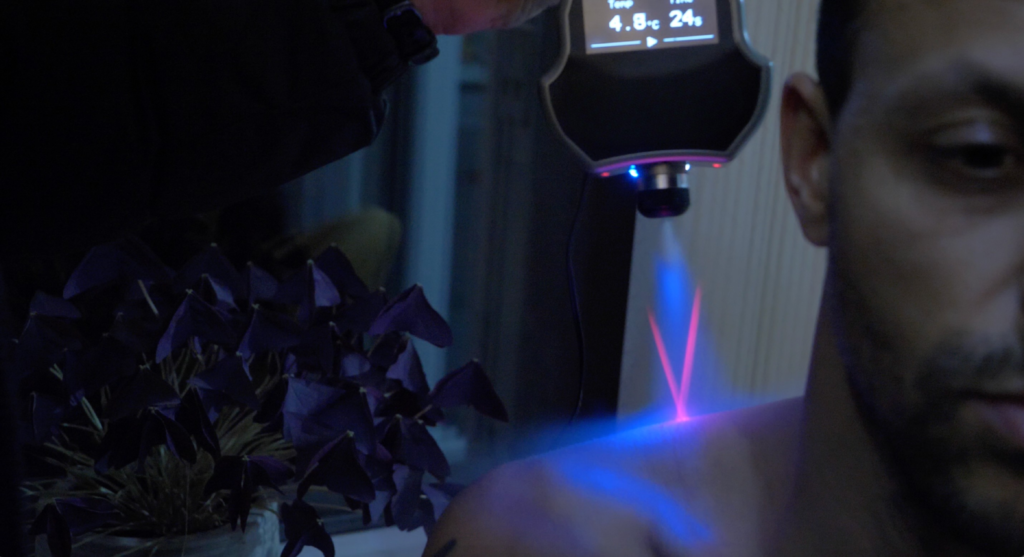
For those of you working in injury management, we want to highlight an important educational point around Localised Cryostimulation and how it’s often misunderstood in clinical and performance settings.
A common issue in the Cryotherapy space is a lack of clear understanding of underlying physiology and how different cold modalities compare in thermal transfer, vascular response and intended application. This often leads to oversimplified or sensationalised claims that create confusion in practice.
From a physics perspective, thermal conductivity differs significantly between mediums: ice provides the most direct conductive cooling, followed by water, with air or vapour-based systems providing more superficial convective cooling. This has important implications for tissue depth and cooling efficiency.
For example, Mawhinney et al. (2017) found cold water immersion produced greater reductions in limb blood flow (~70 – 85%) compared with Whole Body Cryotherapy (~45 – 60%), reflecting differences in cooling efficiency and vascular response (vasoconstriction).
Other work (Merrick et al., 1993) shows that ice alone produced greater cooling effects than compression combined with ice, particularly at deeper tissue levels. This suggests that conductive cooling and exposure duration are key determinants of tissue temperature reduction, with compression primarily influencing superficial cooling. Ice alone without pressure can also provide a more stable conductive interface, supporting more consistent heat transfer over time.
Across both whole body and localised Cryostimulation modalities, typical exposure times are short (up to 3 minutes), producing modest reductions in muscle temperature compared with traditional icing (Costello et al., 2012; Bleakley et al., 2014). These modalities mainly influence superficial tissue temperature and autonomic response rather than deep intramuscular cooling.
In practical terms, ice produces longer sustained local cooling due to prolonged contact, helping maintain vasoconstriction and reduce local metabolic activity during acute inflammatory phases. Cryostimulation devices, by contrast, produce a rapid but shorter-lived stimulus with quicker rewarming, making them less suitable where sustained suppression of tissue metabolism is required.
This is why these methods should not be treated as interchangeable. Ice, Localised Cryostimulation and Whole Body Cryotherapy all serve different physiological purposes:
- Ice controls the injury.
- Localised Cryostimulation stimulates tissues locally.
- Whole Body Cryostimulation regulates the system globally.
The key is not which method is “better,” but understanding injury phases, types of inflammation and selecting the appropriate modality.
If you’re looking to deepen your understanding and gain formal qualifications in cold and heat therapies, we offer education pathways designed to develop practitioners into qualified Thermal Recovery Specialists working at an advanced clinical level.
Explore our Thermal Recovery Specialist course and premium thermal therapy training services for businesses interested in team training through our workshops.
Have any questions? Send us a message and we will be happy to help.