
Most wellness businesses have invested in the equipment but very few have invested in knowing how to use it
A Cryochamber, a Localised Cryotherapy device, a sauna, cold plunge and contrast therapy can all trigger a physiological response. But in most venues the client is either left to work out the rest, or simply receives a stream of cold vapour or steps into a chamber for 2 – 3 minutes.
Clients Need Coaching, Not Just Access
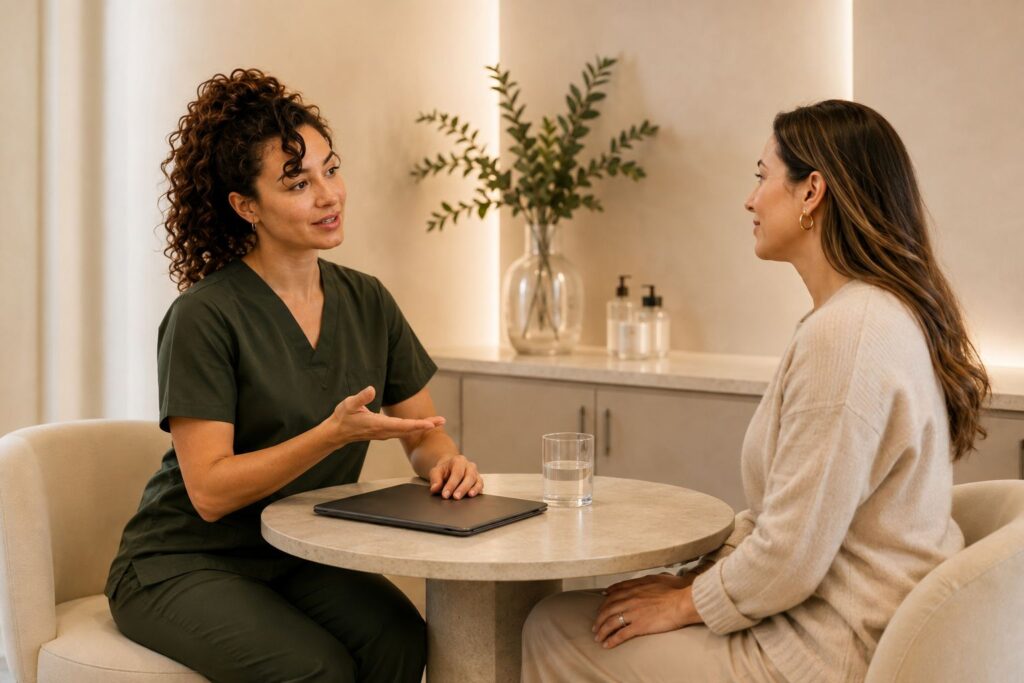
Clients need coaching on how long, how cold, how often, in what order and when to stop. They also need to understand what each therapy provides, because these modalities differ widely in how they support a client’s goals and in how they are implemented to deliver lasting outcomes.
Learning How To Practice Matters
The dose and the sequence change what the body gets from the therapy. Get it wrong, and a first-timer has a hard, uncomfortable session and never comes back. Or a client spends money on a course of sessions, feels some symptom relief, finds the problems persist and decides it isn’t worth the time and cost.
The Education Issue Across The Industry
AdvancedCryo have worked in health and fitness, strength and conditioning, personal training, elite sports recovery, wellness service management and thermal therapy education. In every one of those fields, knowledge keeps evolving as the evidence and practice develop.
The exception is Cryostimulation. Understanding of the therapy has gone backwards over the last decade, as sales strategies have often replaced its medical foundations. “Three minutes, as often as possible” became the standard, and the questions of when it suits, what the goal is and how it fits a wider plan got lost.
A Response Is Not An Outcome
Heart rate shifts, noradrenaline rises and skin temperature changes, but none of that shows the client is better off. Outcomes come from the wider plan around the therapy:
- Build the plan on the fundamentals of recovery management, with therapy implemented to support the goal.
- Choose the therapy to support the goal, not to offer access to a menu of devices.
- Set the frequency to the client’s presentation and phase.
- Avoid over-stacking, which raises the physiological load and hides what is working.
- Adapt individual sessions e.g. when the client is fatigued, stressed or unwell.
- Measure progress and reassess.
What We Teach
Become a Recovery Specialist, not just a device operator.
At AdvancedCryo, a qualified Recovery Specialist is educated to practise Thermal Recovery, applying cold and heat therapies with the clinical skills to manage injury, recovery and longevity goals.
The therapy is the tool. The practitioner builds the outcome.
AdvancedCryo exists to build stronger practitioner knowledge, skills and success. If your interested in becoming a qualified Recovery Specialist you can explore our courses here.
Want to learn more about our courses, or explore a partnership? We’d be glad to have a conversation. Send us a message and we will be happy to help.